
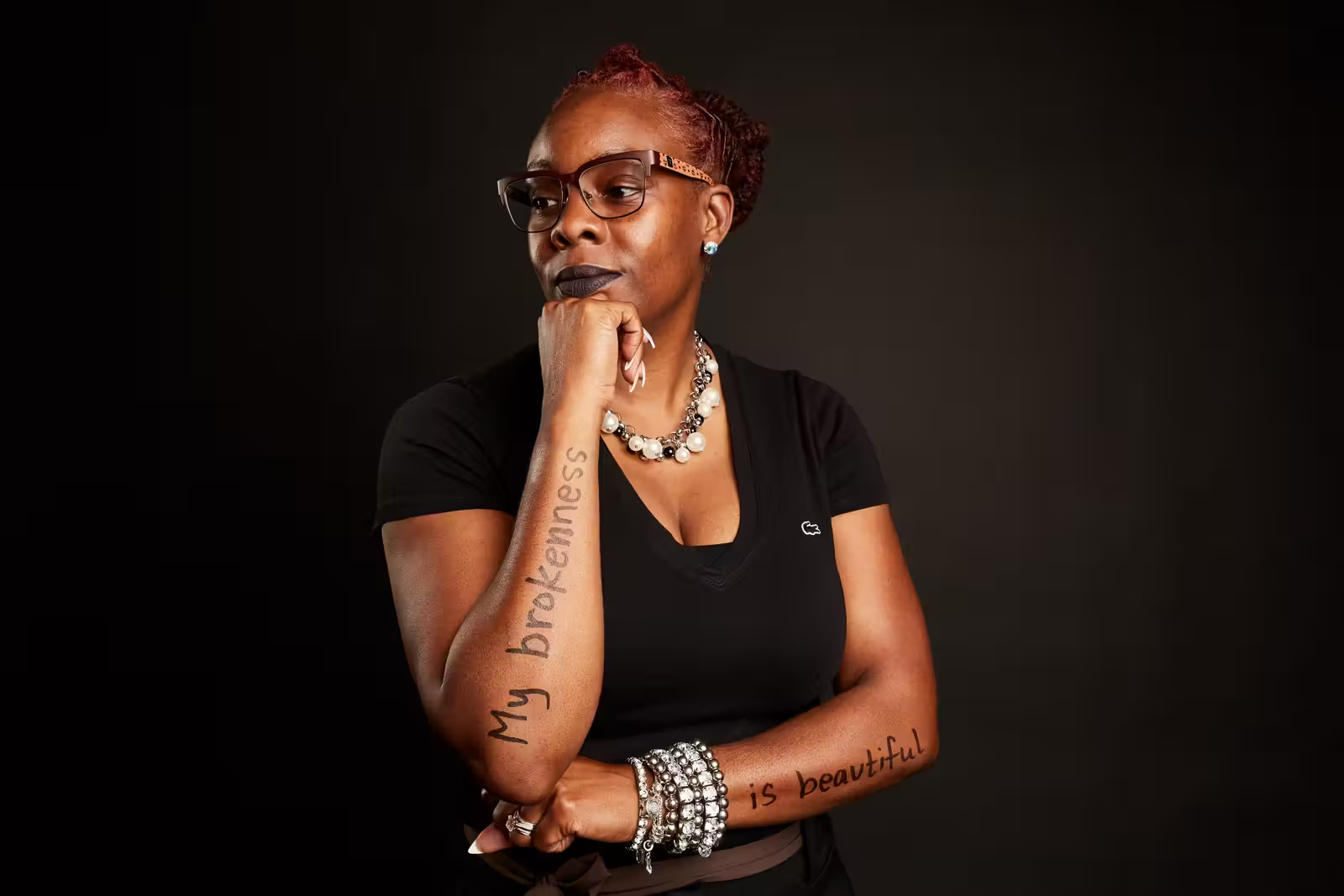
“My brokenness is beautiful”
Is this your story?
Add your story behind this photo.
My brokenness is beautiful. When I think about what shaped me, I don't think about one particular moment. It was an accumulation of moments and people—the ones who showed up, the ones who couldn't, and eventually, the people I learned to show up for. I grew up with parents who struggled with substance use. My father lived only a few miles away, but our family situation was complicated. I was born out of infidelity, and the two families ultimately shared him. Although he lived close, he wasn't always able to be the father I needed. My relationship with the woman I call my Second Mom began in a way I didn't fully understand until recently. My family loves to play spades, and one night we were at my cousin's house playing cards well into the early morning hours. We lived in a rural area surrounded by woods with no streetlights. We didn't own a car, and home was more than a mile away—a single-wide mobile home with no electricity or running water. I didn't want to walk home in the dark, so my cousin's wife asked if I wanted to spend the night. I said yes. That one night turned into about three months. My mother left me there. She didn't call or come back to get me. For most of my life, I assumed some arrangement had been made. About a year ago, while telling my cousin the story, she said, "I'm sure your mom had some kind of arrangement with her." I said, "I don't think so. I think she just left me there." So I called my Second Mom and asked. There had been no arrangement. More than 30 years later, I finally understood what had happened. I had gone to spend the night, my mother didn't return, and a woman who hadn't planned on raising me took on the role of a Second Mom. And even with the stability and care she gave me, I still wanted my mother. I can be grateful for the woman who stayed and still acknowledge what it felt like to be left. I can love my mother and tell the truth about how her choices affected me. Both are true. Life continued. I became a mother during my sophomore year of college. I didn't always know what I was doing, but I knew being a good mother to this little girl was mandatory. I couldn't bring a baby back to the home where I had been staying, so I had to figure it out. Parts of that time are blurry because I was in survival mode. I got married the following year, had two more children, and that marriage eventually ended. That's part of why I have a complicated relationship with the word resilience. We tend to call people resilient after we know how their story turned out. While you're living it, you don't know how it turns out. Sometimes you're just trying to make it through. The meaning came later. Eventually, my life's work became helping people through difficult moments of their own. The beauty in my brokenness is that I've been able to use the broken places in me as a bridge to meet other people where they are. I can sit with someone without needing them to clean up their story because mine isn't cleaned up either. There are things I've healed from and things I'm probably still healing from. There are experiences I understand differently in my 40s than I did at 20. That's authenticity to me. Then I became a mother to my little cousin. I brought her home from the hospital at two weeks old. Her mother, who had also grown up with us at my Second Mom's house, later struggled with substance use and became incarcerated. Her father had his own struggles with substance use and eventually lost his life because of them. As her story unfolded, I saw so much of my childhood reflected back at me. Here was another little girl being cared for by other people while still wanting her parents. Of course I knew that feeling. Because I knew it, I wanted to protect her from the broken places I could see ahead. But I couldn't. I can love her, show up for her and walk beside her, but I can't live her story or reconcile it for her. That part belongs to her. When I originally wrote "My brokenness is beautiful" for Dear World in 2019, I connected those words to the full-circle moment of doing for my little cousin what my Second Mom had done for me. Seven years later, those words mean more. I don't see myself as the healed woman looking back at the broken girl. They're both me. I am proof that you can make meaning in your life without first becoming some perfectly healed version of yourself. That's my wish for my little cousin, too. Not that she'll decide everything that happened to her was okay, but that she'll live enough life to decide for herself what her story means. And that's what I want for anyone reading mine. Maybe you can't see anything beautiful in your broken places yet. You don't have to force meaning onto them. I don't call everything that happened to me beautiful. Most of it wasn't. However, the broken parts of my story aren't separate from the woman I am proud to be. You get to explore the beauty in your brokenness by being the author of your own story.