
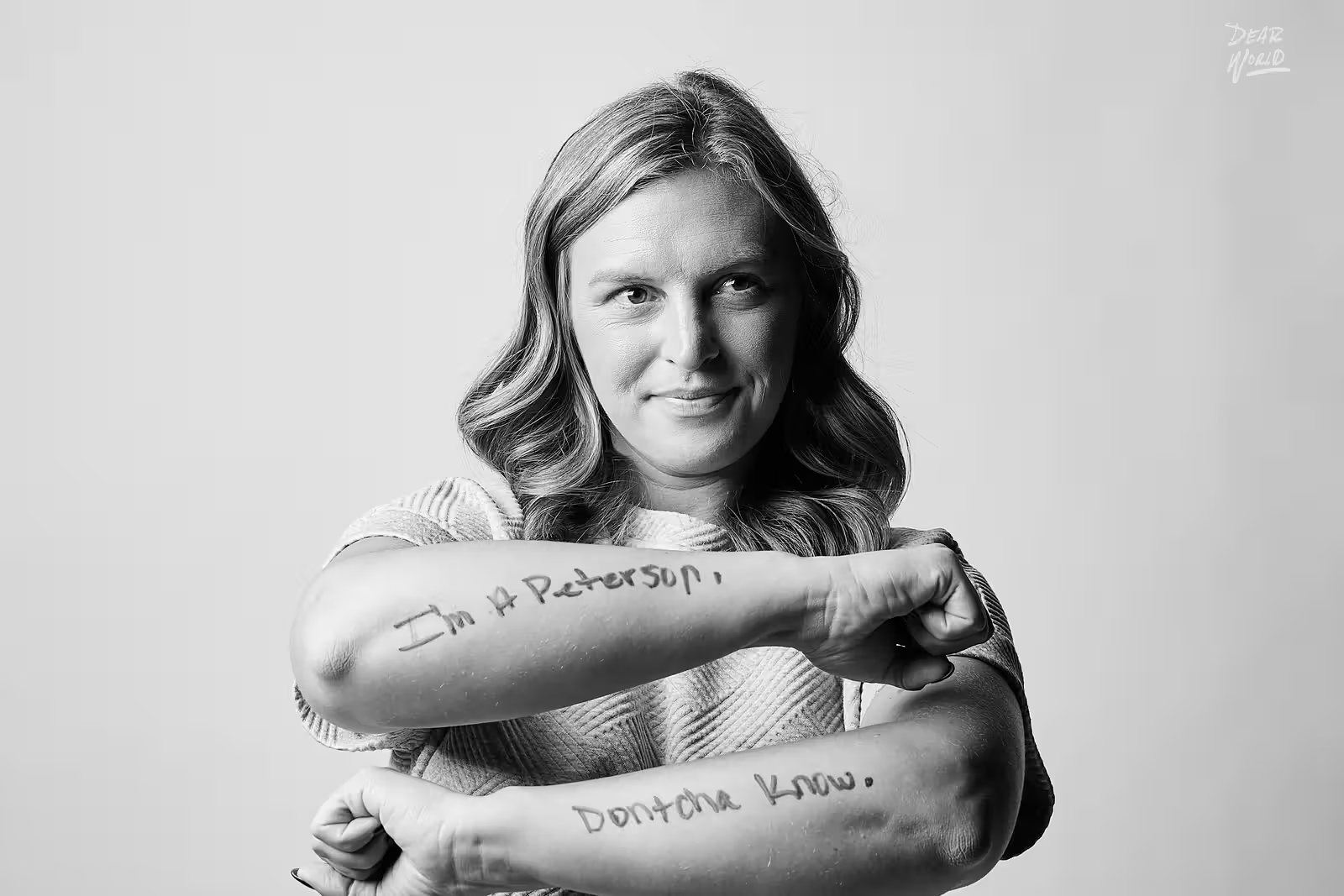
“I’m a Peterson, Dontcha know.”
Is this your story?
Add your story behind this photo.
In the town where I grew up, you could blink and miss the whole thing. A single main street. No stoplights. No stop signs. Three bars, a ball field, a church, and the kind of history that lives in people more than buildings. But for my family, two buildings on that single main street held almost all of it: the house and auto shop my great-grandparents built with their own hands. That place is more than the first PO Box in town. It is where my grandpa was raised, where he worked his whole life, and where my dad did the same. It is where my grandma and grandpa took their prom pictures. It is where children became parents and grandparents became great-grandparents. It sits on Main Street like it belongs to the town as much as the town belongs to it. Every year, during the Ox Cart Days parade, that front yard becomes a gathering place and where nobody is a stranger. To most people driving by these days, it is just a house and a shop. To me, it is proof that roots can grow deep enough to hold generations. I grew up surrounded by those roots. In a small town where my grandparents were raised blocks from each other and were best friends before they were ever husband and wife, family was not just important; it was everywhere. I saw all of my great-grandparents on my Dad's side nearly every day. I was raised not only by my parents, but by the stories, grit, and example of the people who came before me. I can say the women in my family shaped me most. I did not grow up ever thinking too much about whether I was being raised to be a strong woman. I was just raised to do what needed to be done. I was a tomboy. I learned early that my capability mattered more than anything. No one told me to sit still, be small, or wait for someone else to handle things. In my family, the women handled things without being prompted. At the center of that legacy is my Grandma Carrie, whose signature line is: “I’m a Peterson, don’t cha know.” She says it with humor and confidence, whether she is trying to charm a discount out of someone, push a request a little further, or explain away her stubborn streak. It always gets a laugh. But underneath it is something deeper. It is not really about getting her way. It is about knowing exactly who she is - although my Grandpa would argue that she should be saying her stubborn and independent streak is from being an 'Anderson, don't cha know'. My grandma was the only girl with four older brothers, raised by a mother who seemed to do everything. My great-grandmother taught in a one-room schoolhouse, served as village postmaster, was village clerk, and lived as if the words “I can’t” simply did not apply to her. Neither of them had a weak bone in their bodies. They were women who got things done, got through hard things, and kept going without needing recognition for it. For a long time, I did not think of that as something unusual. It was just the air I breathed. But now, in my mid-thirties, I understand that those women gave me more than memories or a hometown to love. They gave me my instincts. My resilience. My work ethic. My refusal to back down. My belief that when something needs doing, you do it. So when I chose the words to write on my arms, I chose more than a family saying. “I’m a Peterson, don’t cha know” is funny, familiar, and deeply personal. It carries the voice of my grandma, the strength of the women before her, and the legacy of a family tied to one small town and one stretch of blacktop. It reminds me that I come from people who built things, stayed rooted, showed up, and kept going. That phrase defines me because it explains me. I am strong because they were strong. I am grounded because they gave me a place to belong. I am who I am because I come from generations of people, especially women, who never questioned whether they were capable. I’m a Peterson, don’t cha know.