
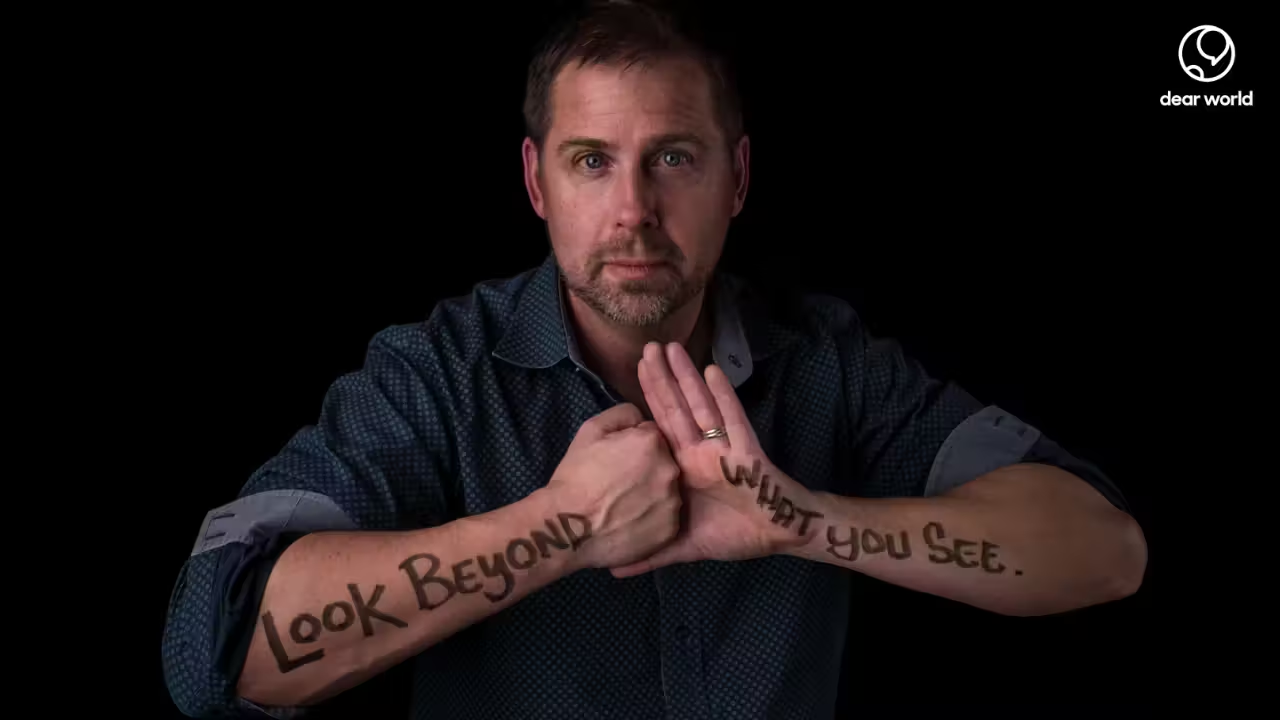
“Look Beyond What you see.”
Is this your story?
Add your story behind this photo.
In my small town elementary school, I was placed remedial classes because my teachers believed I had a learning disability because my reading comprehension was so poor. As it turned out, I didn’t have a learning disorder, I was just lazy. I wouldn’t read the stories. I just answered assigned the questions in an effort to always be the first one to finish. Throughout elementary school, nobody took the time to figure what was going on so everyone just assumed that I had a learning disability. It wasn’t until Mrs. Mahoney--my 7th grade teacher--came along. I remember her as a tall and slender woman. She had really red hair and freckles. She wasn’t always the nicest teacher. She was firm and pretty strict. But clearly very caring. She took the time to look beyond what my objective performance was telling her. She made the effort to understand why I was not doing well. She talked to my parents, took a risk, and challenged me to take on more difficult work. She recommend that I be put in classes with the more advanced students in the advanced classes and told me to stop taking short cuts, put my best effort forward, and not settle for poor performance. I never looked back and graduated in the top ten percent of my high school class. Mrs. Mahoney didn’t see me as a lazy kid or a kid with a disability. She saw something more in me than anyone else had. Remember your first big break? Early in my career at Genentech, I was involved with a project that was partnered with another company. It was a project that had little budget to support it. In those days, we called it a “Macgyver” projects. We had to patch together resources to get an early read on whether the medicine would work or not, and if it did could we bring it to market. When we saw early positive data, the company made a decision to advance the medicine into advanced clinical trials. Based on the role I had played, uur head of product development saw something in me. He asked me to lead the overall product development efforts. As I look back, that was unheard of to give someone that junior that level of responsibility. That was David Ebersman. David went on to be CFO of Genentech and then CFO of Facebook. While I was leading the project, I would meet with him every few weeks to update him on the status of the project. But those projects often graduated to informal mentorship sessions. I would inquire about how the organization made decisions, how the company thought about investment decisions and why we did things the way we did. He allowed me to be inquisitive and at the same time he would always ask me what I thought and I asked me if I thought we were doing things the right way. He never let me off the hook and always made me have an answer. I loved that about him. Your leadership style I have a list of 10 statements that I share with my team whenever I take on a new leadership role or I welcome new hires to our organization. One of them relates to being a problem solver. I tell folks, “Don’t come to me with your problems. Come to me with your solutions.” Something else that David Ebersman taught me. Why this is important is because in almost all situations, the members of my team are closer to the project, closer to the issue and are the experts. They no far more about the situation than I do. So, asking me for the answer is far less likely to advance the problem than them thinking through the issues and challenges and proposing some ideas on how to move forward. So, I don’t like it when they come to me with just the problem statement. I make sure they come to me with both the a problem and some potential solutions. Then we can debate the merits of the options and/or brainstorm new ideas. Any others pieces of advice you have received regarding management? Myrtle Potter used to be President and COO of Genentech. I didn’t work with Myrtle for very long but she left me with a metaphor that has stuck with me for many, many years. I think of her often and reference her when I am challenged with decisions around prioritization and risk-taking. She’d say there are two types of projects. Those that are like your “everyday plates” and others that are “the fine china.” She would say, “sometimes the everyday plates are going to break but let's make sure that nothing happens to the fine China.” I’ve always loved this statement. And anyone who works closely with me has heard me say it. It resonates with me when I think about assigning projects to members of my team and when and where we can we can take risks with our people and our business. It also reminds me that not everything needs to be perfect and it’s ok to make mistakes on the lower priority stuff. But somethings we can’t afford to make mistakes. Over the years, this has come to mean more to me having suffered through some manages that thought every problem was top priority (aka the fine china). I’ve come to learn you and you and your team can’t operate like that.
Story Shape
also known as Boy Meets Girl
A quiet or low beginning that opens into an unexpected, decisive high.
Then → Now
+7
Their value
Faith
What it means
You persisted.