
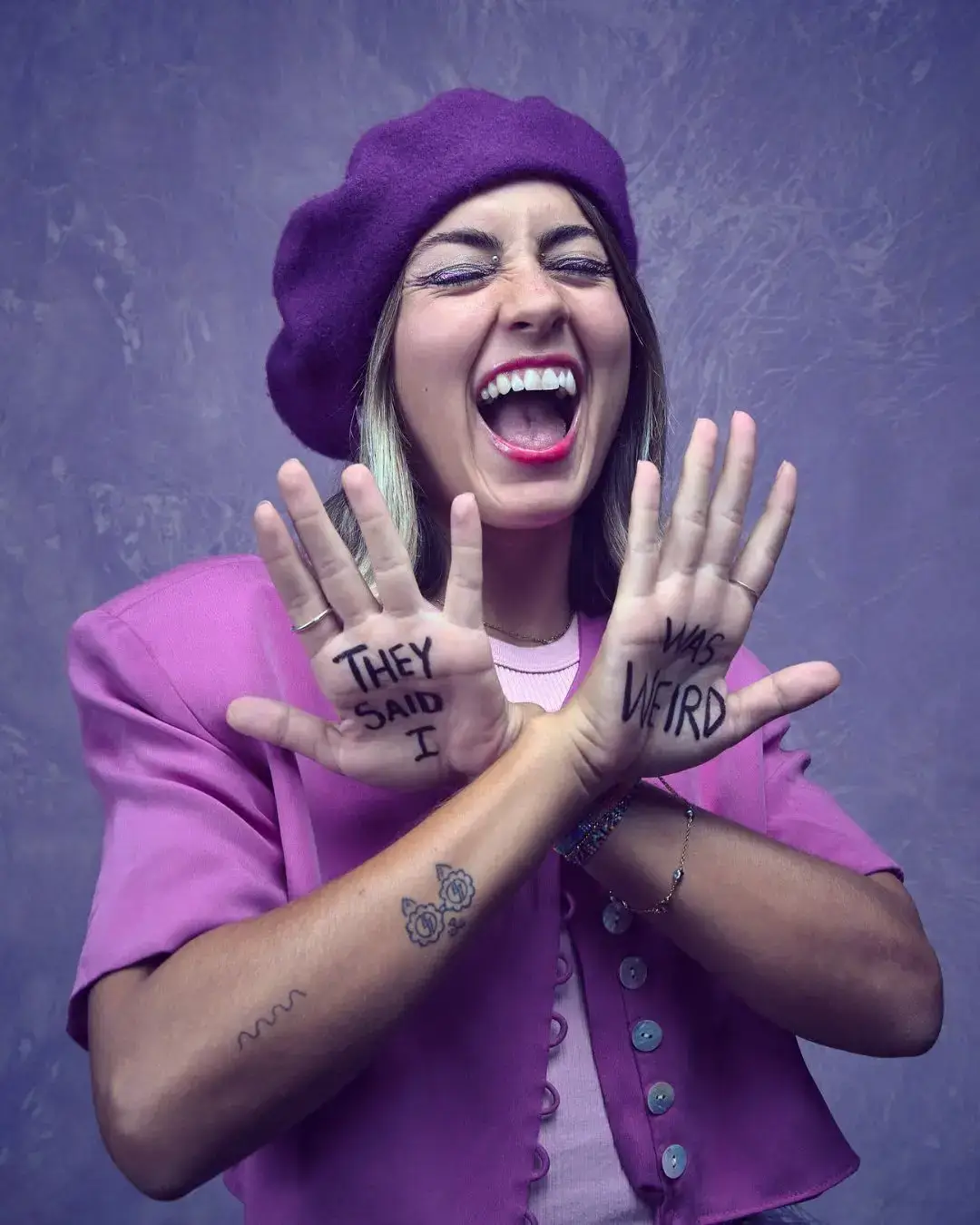
She sparkled in a room full of sparkly people. The purple on purple reminded me, surprisingly of my catholic grade school uniforms. We wore wool red cardigans. And I remember a boy I called fat because his cardigan didn’t fit. His blue shirt hung out and his buttons bulged. The principal, Mrs. Pryor, pulled me into her office. I don’t remember her exact words, but I remember the heat in my face, the sinking feeling in my stomach, the realization that I had crossed an invisible moral line. Psychologists call this shame memory.1 Unlike guilt, which attaches to behavior, shame attaches to identity. It lingers. It revisits. It shapes future decisions in ways we often don’t consciously recognize. That day I learned something important, though I couldn’t articulate it then: Children are not just learning math and reading. They are learning the rules of belonging. And oh how we yearn to belong. We’re wired to fit in and distance ourselves from what looks socially dangerous. We adjust who we are based on what we believe others will accept. By high school, I had become proficient at this. I knew what brands to wear, jokes to land and to stay inside the cool kids’ lane. One High School Halloween, my cousin — who attended the same school — dressed up as me. American Eagle was a hot teenage brand I wore a lot. He dressed in it head to toe. When people asked him what is costume was in the hallways, he said, “I’m Robert Fogarty.” The hallways buzzed. People laughed. I was mortified. You could say he was mocking me. Now I see he was revealing a deeper truth. We still joke about it 20 years later. What a great burn it was. He was less concerned with fitting in. Most of us prioritize belonging early in life. It feels safer. It is safer. But if we never transition toward individuation, we risk building adult lives that are structurally sound yet psychologically hollow. Here’s the uncomfortable realization I’ve come to: The kids we labeled as weird were often ahead of the curve. They were publicly negotiating identity while the rest of us were privately suppressing ours. They weren’t necessarily more confident. They were simply more willing to be misunderstood. Today, I see how this pattern shows up in organizations. In many workplaces, people continue to perform social mirroring. They study what gets promoted, what gets praised, what gets ignored. They adjust language, ambition, even values in order to maintain group membership. From a leadership perspective, this creates a hidden risk. You may build a culture of compliance instead of a culture of contribution. Teams that over-optimize for belonging tend to minimize dissent. Innovation slows. Honest feedback disappears. Creative tension get replaced by appeasement. Individuation, on the other hand, introduces friction. It brings unconventional ideas, different communication styles, and sometimes discomfort. But it also brings energy, originality, and resilience. The challenge for leaders is not to eliminate belonging. It is to expand the definition of what belongs. To create environments where people do not have to trade authenticity for acceptance. I sometimes wonder how different our trajectories might be if someone told us this on the first day of school. We spend our childhood trying to stay inside the group. Leadership begins the moment we help others become fully themselves within it. Sincerely, RXF PS: We help teams see each other differently by telling meaningful stories like this. Learn more about my interactive storytelling keynotes and photo shoots. https://www.robertxfogarty.com/
What the ‘Weird Kids’ Understood Before the Rest of Us
“The real costs of being cool”

Robert X. Fogarty, Founder of Dear World
Mar 12, 2026·3 min read
Bring Dear World to Your Event
Book Robert’s Award Winning Keynote Speech & Dear World Portrait Shoot
Looking to inspire, connect, and engage your people in ways you never thought possible? Talk to our team about bringing the Dear World keynote and portrait shoot experience to your next event.
Talk to Our Team