
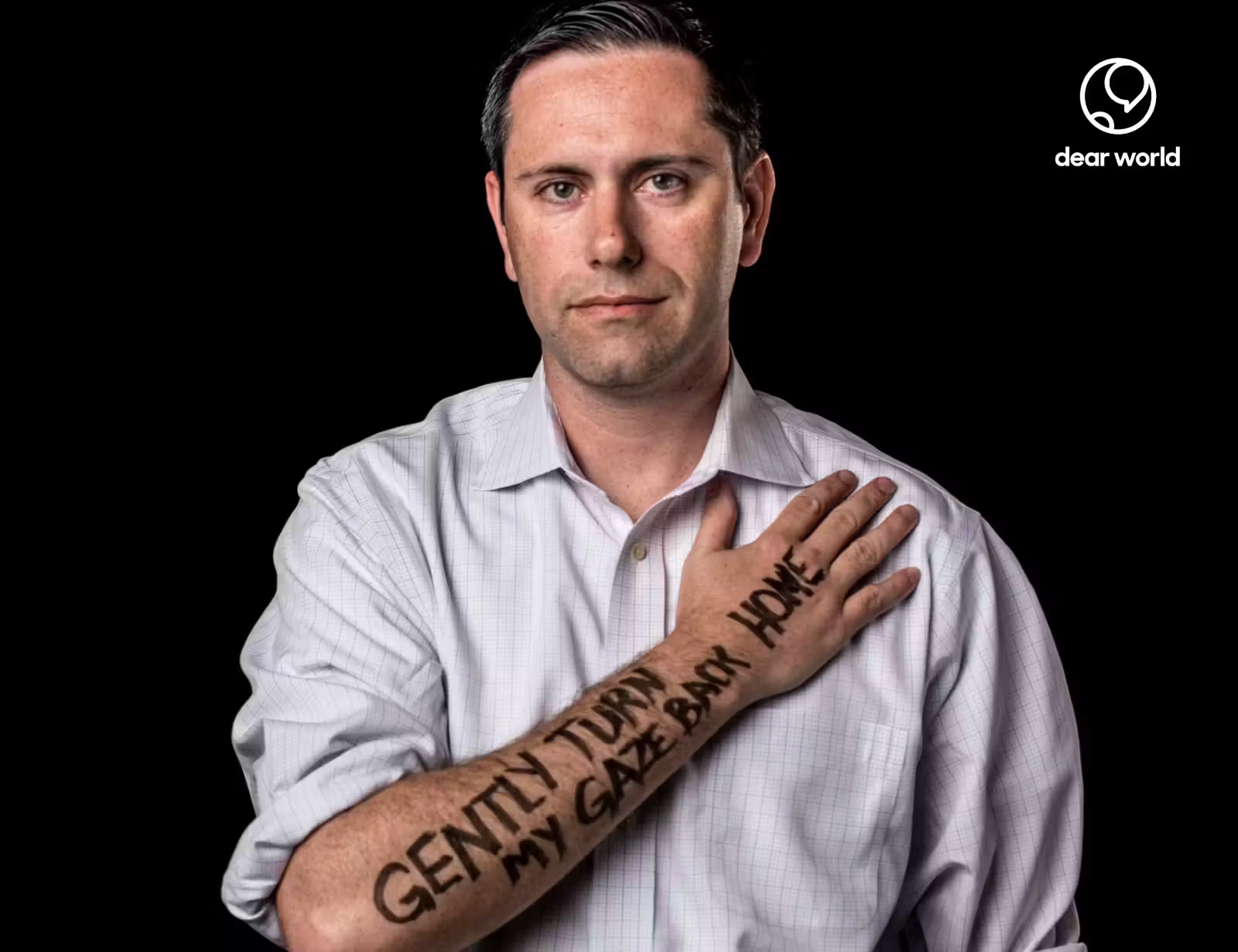
“Gently Turn My Gaze Back Home...My Wife, My Boys, My Life”
Is this your story?
Add your story behind this photo.
It's quite a story. My twin sister died by suicide in 2003. She had bipolar disorder. At my funeral – she was my only sibling and as a twin, I did the eulogy and I was very open about why we were all here tonight. We were here because of mental illness and we were here because she died by suicide and she was 26, so I did the eulogy and at the end of the eulogy, there were four or five hundred people there, this was in the St. Louis area, and every 5th or 6th person in the line came up to my parents and I and said 'You know what, I'm so glad you said it was suicide and it was mental illness – I have a cousin who has bipolar disorder and we've never talked about it.' 'I have an uncle who died by suicide 10 years ago and our family has just forgotten about him and we've never talked about it.' And we were just completely blown away – our openness about what happened, it's like it made it okay for everyone else to be open about their story too. And so we were obviously in a deep period of grief, but my parents and I talked right after that and said you know, we need to do something. There's such a stigma about talking about mental illness and suicide in our country and everyone's afraid to talk about it. It took us a while to figure out what we were going to do, but about a year later my dad had written a book called 'A tattered tapestry: a family's search for peace with bipolar disorder' and it's told from my dad's perspective but it also includes writings from my sister. She was very creative, very much a writer. I was business, math, sports and she was poetry, creativity, and english literature – that was kind of her passion. So we wrote this book and then we decided, you know, we're going to launch this foundation. And the Karla Smith Foundation officially launched in 2005 with a mission to help family members dealing with mental illness and suicide. We believe we're the only organization across the country that focuses solely on the family members because that's what we knew. We knew what it was like to try to support her dealing with so many issues that come from mental illness – from getting her to take her medication, getting her to counseling, the network of friends that needed to supporter her, a lot of legal stuff around getting someone who is above the age of 18 to actually get hospitalized and medicated as needed. So we started support groups for family members and friends. And then also we know the grief of a suicide, which if you've ever lost a loved one to suicide, it is a painful, very unique grief that only you can feel if you've felt it. So we started with support groups and we didn't know what the foundation was going to become. And actually 90% of nonprofits actually fail after the first 2 years because they're unable to sustain themselves financially and just to keep it going. But we're now in our 10th year and we've expanded – we have programs where we go into schools and educate – a program called 'Think about it' which educated high school students about mental illness and it's okay to say you have a mental illness. We have a program that helps companies called 'Open door' where we go in and we educate companies about mental illness. I speak nationally at times to different colleges. And we've just been very open. The foundation has just sort of grown and it's happened. We now have a staff of 4 people and we have offices and it's all around the St Louis area but we get emails and people hit our website all the time of someone who has lost a loved one to suicide and my parents and I will take a call. And we may talk to that person for 30 minutes and that person and that's it. But it just kind of gives them the comfort that they're not alone. To get back to why I wrote that on my arm. You're probably familiar with the Serenity Prayer 'God grant me the serenity to accept the things I cannot change, the courage to change the things I can, and the wisdom to know the difference' – it's a pretty common prayer. She actually added a second verse to that and the first line of that is 'Gently turn my gaze back home towards simplicity, grace and gratitude. Remind me that we are all imperfect, holy, and free. Open me to know and embrace your peace.' And she was writing that in probably some of her final days before she ultimately died by suicide and, so when she died we had that printed on prayer cards and handed that out. It's kind of just, every time we do a support group – we're not like a deep religious organization or anything – but we pray that at the end and we do an annual dinner auction every year and that's always part of the program – her version of the serenity prayer. So I use that line on one arm. And then I added 'My wife, my boys, my life' on the other arm. [stopped at 6:00... the next 5 minutes of recording are another story about meeting wife, but not as strong as first part]