
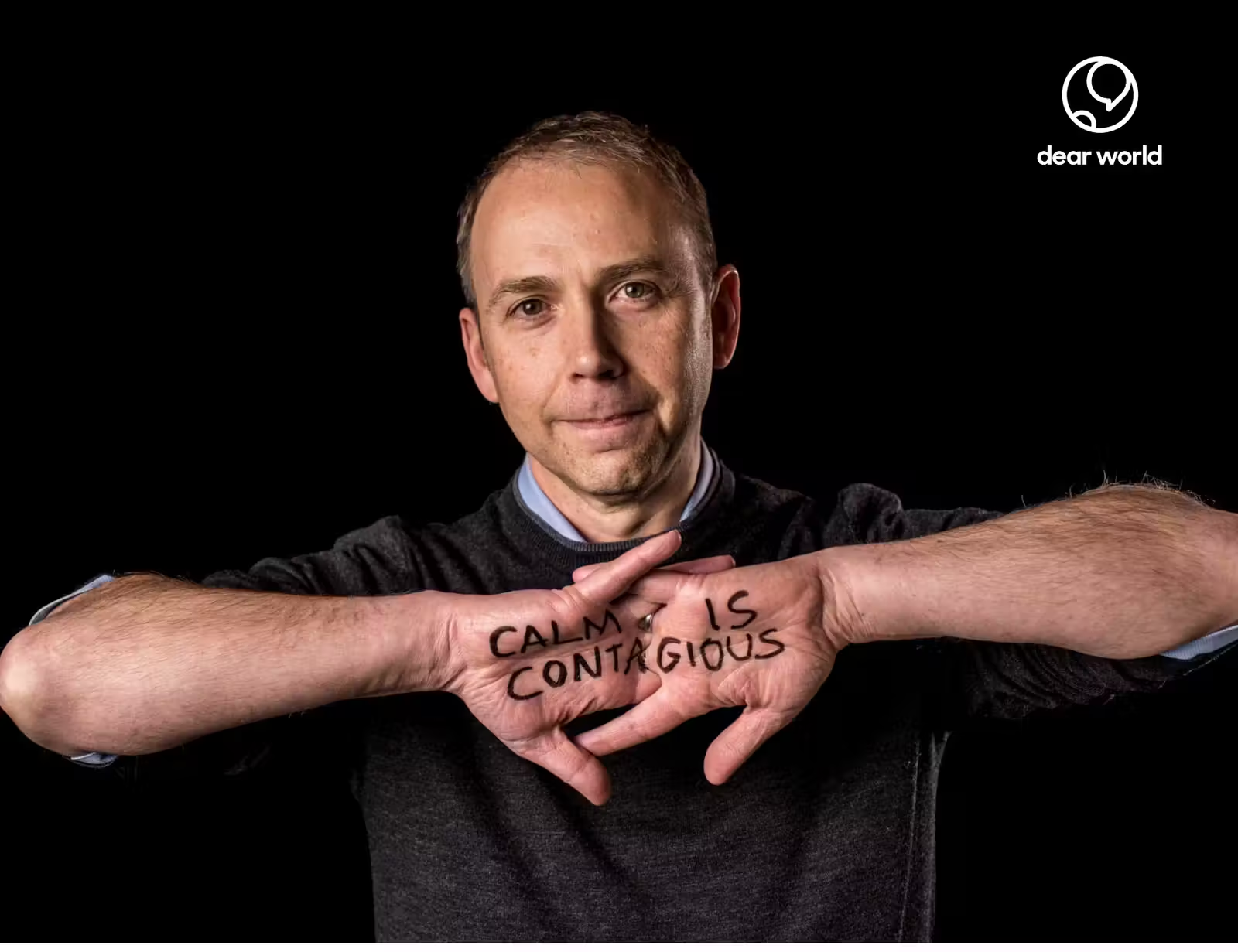
“Calm is contagious”
Is this your story?
Add your story behind this photo.
Story one - 5 I actually heard the phrase from a Navy Seal who was telling the story about BUDS training which they go through which is really intense. It's the basic training for the Seals – if you make it through this course then you're a Seal, and it's like the hardest course ever. It's like 8 weeks of intense craziness. But he was telling this story and I guess all of the lead trainees were trying to get their teams organized for this mission or drill or something, and they were all just running around like chickens with their heads cut off. And the sergeant gets up on the balcony and he says 'Everyone drop on one knee!' so that's their signal that they need to slow down and listen. And all he said was 'Calm is contagious.' Sure enough, everyone got the message, started calming down. And as soon as they calmed down, then all of their sergeant and privates and everyone that was answering to them, all of them calmed down. In the world I work in – consulting – sometimes things can get crazy and I'm a pretty laid back guy. So I feel like when I talk to my people and they can see that i'm confident and calm and relaxed, then it usually starts spreading around. Story two - 7 C: What was your West African upbringing like? It was all I knew. We were in Africa for four years at a time. I went to boarding school in a country different from where my parents were. So nine months out of the year I was away from my parents at boarding school. My parents were in Guinea for most of the time, and I went to boarding school in Sierra Leone which was a former British colony. Guinea was a socialist communist country so my parents had to get special permission to travel over the border to drop us off and pick us up a couple months later. And this was well before phone lines or cell phones or anything so there was really no communications. For two months I wouldn't hear from my parents other than letters that would get delivered. C: How did that shape who you are? It certainly gave me exposure to other cultures, and multiple cultures because I spent time in Ivory Coast as well – the high school that I went to was in Ivory Coast. So same drill except this time I had to get on a plane instead of my parents driving me to school. And my first experience leaving my parents was when I was seven years old for first grade – waving them goodbye and not knowing what I was getting into. But I had my sister and she was a strong support. And then the school was pretty small – like 50 kids – so it was like having 50 brothers and sisters throughout school. And I could lean on them anytime. And ages 1st grade through 9th grade. They were primarily Americans but they would occasionally let someone in whose parents were diplomats or bankers or something like that. So I got exposure to people who weren't religious. It was a very strict religious school. I had to pack up all my stuff every couple months to go to school. And then, you know, pack it up to go home. And we'd come back to the states every 4 years for a year. So I would have to make new friends knowing that I was going to say goodbye to them at the end of that year. It was always a culture shock every time we came back to the states. We'd walk into the grocery store and it would just be astounding because there was more than one kind of cereal. The older I get the more open the countries got, but as a child you couldn't buy stuff in the market or in the town. We had to bring everything with us. It wasn't available. [brief history of decolonization in West Africa] But we had fresh food – we had fresh vegetables and fruits every day. But no canned goods, no cake mixes, no cold cereal – nothing like that. And then as I got older things started to ease up a little bit and then started to be able to get goods and services. C: What did you take away from that experience? The exposure to other cultures is fascinating to me because I see people differently than the typical American. I see someone from a different culture and I feel an affinity towards them because they're in America and probably scared and don't know what to think about everything that they're seeing and I've been through that. Simple things like, we flip that switch and we don't think about it, the lights come on. You don't think about it. Where I grew up, we had our own generator. The lights would only come on when the generator was on. And only if we could afford the fuel for the day. Simple things like that, I don't take them for granted as much as some others might.